Currently Empty: ₹0.00
If you grew up around sarees, you know this already: a handloom saree is never just fabric. It holds memories. My earliest memory of a handloom is watching my grandmother fold her sarees. She would run her fingers over the weave and tell me which festival she wore it to, who wove it, and why that colour mattered.
Every region in India has its own weaving style, and each one carries a piece of history. Let me take you through some of the most loved handloom sarees, not like a textbook lesson, but like a walk through familiar cultural streets.
Banarasi Saree
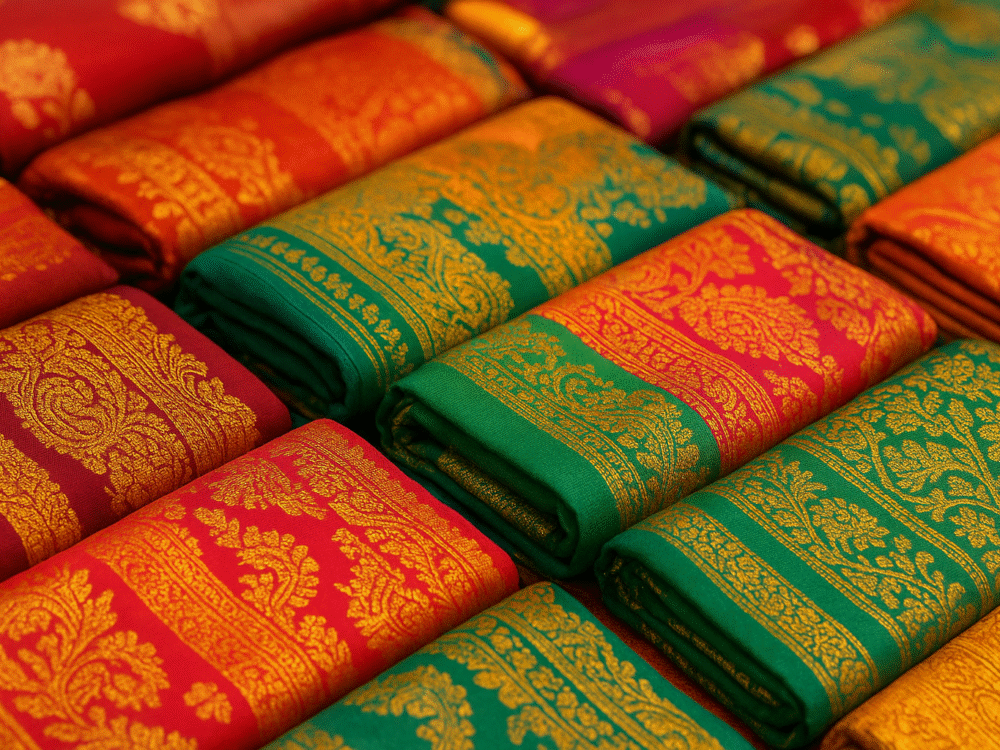
Imagine a bride entering a hall… heads turn before anyone even notices the jewellery. That’s what a Banarasi does. Woven in Varanasi, these sarees feel a bit grand even when they are kept folded inside the cupboard. Rich zari, delicate floral motifs, and the kind of shine that instantly signals celebration.
People don’t really buy a Banarasi. They invest in one. It usually stays in the family longer than we do.
Kanjivaram or Kanchipuram Saree
South India’s pride. You cannot ignore a Kanjivaram when it enters the room. The silk feels strong, the colours are unapologetically bold, and the contrasting borders make a powerful statement. These sarees often mark the biggest milestones, weddings, engagements, and temple occasions.
It is said that a Kanjivaram can outlive the person who owns it. That tells you everything about the craftsmanship.
Jamdani Saree
If Banarasi is bold beauty, Jamdani is quiet poetry. It comes from Bengal, light as a cloud and decorated with tiny motifs that are woven directly into the cloth. A simple drape turns elegant without trying too hard.
Perfect for long afternoons, family gatherings, and times when comfort and grace need to walk together.
Chanderi Saree
There is a softness to Chanderi that feels like morning light. Not flashy, not heavy, but always dignified. Chanderi sarees have been loved by royalty for generations, which is probably why they have this naturally regal personality.
You can wear them to work, to festive days, or even while running the show at home; they never feel out of place.
Paithani Saree
Paithani belongs to Maharashtra, and you can spot one from a distance. The peacock designs on the pallu, the bright colours, the shine of silk, it is like wearing a piece of jewellery that just happens to be soft. Paithani sarees often become a mother’s special gift to her daughter.
They represent celebration. Pure, colourful celebration.
Patola Saree
Patola from Gujarat is for the saree lover who appreciates detail. The symmetry, the geometric motifs, and the fact that it can take months to finish one saree, that’s dedication. These sarees are not made in bulk; they are crafted slowly and carefully.
It feels like owning something exclusive, something that travelled through time and skill before it reached you.
Assam Silk (Muga Silk)
Muga silk doesn’t need embroidery or heavy work. Its natural golden sheen is enough to stand out. The more you wear it, the shinier it becomes. How many fabrics can say that about themselves?
It is rare, dignified, and proudly Assamese.
Why Handloom Sarees Matter Today
In a world filled with fast fashion, a handloom saree teaches patience. Someone sat at a loom for days, sometimes weeks, just to weave one piece. Choosing handloom keeps that artistry alive. It keeps the families of weavers employed. And most importantly, each saree feels personal, almost like it was made for you.
No two handloom sarees are exactly the same. That uniqueness is its real beauty.
A Saree That Tells Your Story
Some people buy sarees for fashion. Some buy them for tradition. But handloom sarees? They are for the moments in life we want to remember forever. If you’re starting your collection or adding something new to it, picking a handloom saree is choosing heritage, heart, and a little bit of magic.
The next time you hold one, take a moment. Run your fingers over the threads. Someone’s skill, heart, and history are right there.
Questions People Usually Ask About Handloom Sarees
1) What is a handloom saree?
A handloom saree is one that isn’t churned out by machines. A weaver sits at a loom and creates it slowly, so it carries a bit of that person’s time and skill in every line of the fabric.
2) What are handloom sarees exactly?
They are sarees made using older weaving techniques that many communities in India have practiced for generations. Each region adds its own story through its colours, patterns, and the kind of yarn they choose.
3) How do you identify a real handloom saree?
When you touch it, you’ll notice the weave isn’t perfectly uniform, and that’s the beauty of it. Handloom folds softly, breathes well, and usually feels more “alive” than machine cloth.
4) How are handloom sarees made?
There’s no rush in this process. Threads are arranged on the loom, and the weaver moves the shuttle back and forth by hand, building the saree patiently over days, sometimes weeks.5) How should I wash a handloom saree?
If it’s silk or something delicate, send it for dry cleaning and store it carefully wrapped in a soft cloth. The cotton ones are easier; a gentle wash in cold water is usually enough, and drying them in shade keeps the colours true.